
Courageous Divorce
A guest post by Alisha Roth on purity culture + divorce

“You were created in the image of God. And thus, your worth is found completely and wholly in the Divine. Divorce may be your great awakening, where you wake up to yourself and the life you could have and find the courage to live it wholeheartedly.”
—Alisha Roth, Courageous Divorce
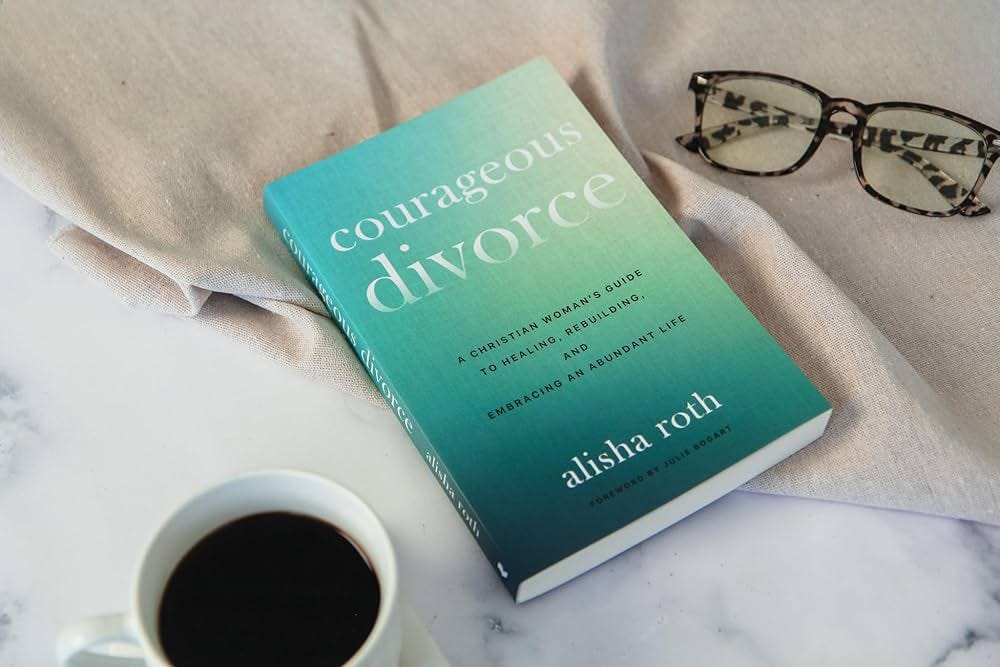
When my writer friend, Alisha Roth, asked if I would consider endorsing her book, Courageous Divorce: A Christian Woman’s Guide to Healing, Rebuilding, and Embracing an Abundant Life, I had to think about it.
I knew Alisha’s book would be thoughtful and beautifully written. I had interviewed Alisha for my book, Recovering from Purity Culture, so I knew her story of getting married young, having five girls, then experiencing abuse in her marriage, and bravely choosing to end that marriage. (You can read Alisha’s story as part of the Surviving Purity Culture series here.) I also share a literary agent with Alisha, so I love to support and cheer on other authors.

But I was hesitant. I’m a marriage therapist with the goal of helping strengthen and heal marriages. I’m a Christian who believes in the covenant of marriage. I have complicated feelings about our culture’s “if you’re not happy, just leave” attitude toward marriage, and toward Christian culture’s “marriage is not to make you happy, but to make you holy” attitude. My nuanced feelings can’t be summed up in a two to three-sentence book endorsement.
Then I thought about a few of the women clients I have worked with. Women who have asked me, “is this normal?” when describing their husband’s behavior, the way he treats them, the sexual things he says or does to them without their consent. More than one of the women I’ve worked with has endured the same kind of abuse Alisha did. Often these women feel stuck in their marriage due to the shame of feeling like a failure, the stigma and judgment from friends and family, and the patriarchal messages of a faith that keeps them oppressed and trapped.
Like Alisha, I believe that God’s heart is to protect the vulnerable. He never wants us to sacrifice our safety, well-being, and self-respect to serve the god of others’ approval. Marriage was created for us—as a gift to bless, enrich, and support us, to provide a partner to walk through this life and serve God with; we were not created to die at the altar of marital commitment. God cares more about the health, well-being, and integrity of the two people involved in the marriage than he does about the marriage itself. When the marriage or one partner is threatening the well-being of the other partner, divorce may be the necessary option.
Again, my feelings are complicated here. I will never judge a couple who gets divorced because my work as a therapist has taught me that you never know the full story behind closed doors. I know divorce grieves the heart of God because of the reasons that divorce is often necessary. I’ve heard it said that the person filing for divorce is often not the one at fault—they’re simply calling “time of death”. They didn’t cause the death on their own, but they did say, “enough is enough.” This book, and my endorsement of it, is for them.
I hope my endorsement of Alisha’s book captures these complex feelings in as much nuance as space allowed:
As Alisha Roth admits, divorce wasn’t part of God’s original design. And as a Christian and a marriage therapist, I value the covenant of marriage. Yet when I think about my clients who are caught in abusive marriages and afraid of the shame of divorce–Courageous Divorce is for them. Through sharing her painful and personal journey of ending an abusive marriage, healing, and rebuilding her future, Roth embodies this courage and shows that God’s heart is to protect the vulnerable. I pray this book inspires other women to choose what honors their dignity, safety, and worth.
—Dr. Camden Morgante
If you find yourself in the position of needing to leave an abusive or unhealthy marriage, or want to understand and support the divorced people in your life, I hope you’ll find comfort, strength, and yes, courage, in Alisha’s book, Courageous Divorce. Enjoy this article from Alisha below on how purity culture contributed to her divorce.
Purity Culture’s Tangled Web with Divorce by Alisha Roth
Trigger warning: abuse
Purity culture promised me that if I saved myself for marriage, then I would have a happy marriage and would experience wildly satisfying sex. It promised me that if I kept my body covered that I would attract the kind of man who would respect and cherish my body. It promised me that a purity ring would lead to my happily ever after. I clung to these promises, followed all the rules, and wore my purity ring proudly.
And yet, when I married at twenty, the promises seemed to fall apart one by one. My marriage was difficult and lacked good communication. Sex wasn’t satisfying, and it was jarring to change my mindset from “sex is bad” before marriage to “sex is great!” after marriage. Several years into our marriage, I learned that my husband had made sexual choices while we were dating that were harmful to another person and deeply hurtful to me as well. For years, he had kept this secret from me. Then, in the final months of our marriage, he began sexually abusing me in my sleep.
Purity culture may have saved us from having sex before we got married, but it simultaneously destroyed our sex life within our marriage. In the end, while I was able to personally recover from purity culture, our marriage couldn’t. Years of bad teaching that impacted us, starting before we even began dating, left our relationship in shambles. Safety and unity couldn’t be built again. Twelve years after we said, “I do,” we signed divorce papers.
Purity culture failed us all, men and women. Its teachings made promises that it couldn’t fulfill, put unrealistic and weighty expectations on us, and failed to prepare us for the reality of relationships and marriage.
My ex-husband and I began dating when we were just 15. As we began flirting with one another and claiming the title “boyfriend and girlfriend,” we were steeped in messages of purity culture. This message told me that I should only date with marriage in mind. So at 15, I was already asking, “Is this someone I want to marry?” I didn’t know I was allowed to be a child—that I could just enjoy dating and take my time before asking the big life questions.
Purity culture taught me rules but not critical thinking skills. I learned that I should wear shorts that were long and tops that didn’t show too much shoulder or cleavage, but I didn’t know how to recognize red flags or listen to and honor my body by steering clear of boys who didn’t respect it. I was taught that I should wait until marriage to have sex, but I didn’t learn how to consider my own sexual ethic.
Purity culture told me to save my body for marriage but didn’t teach me that I had a right to protect my body once married. I was told that boys and men couldn’t control themselves sexually, but I never learned how to set boundaries or to say “no.” I was taught that I should only marry a Christian and that if I prayed hard enough that I would find the perfect husband, but I didn’t know how to decipher character qualities that would make a great husband, like whether he was caring, honest, kind, gentle, helpful, and patient. Essentially, I knew how to follow a list of rules, but I didn’t know how to judge on my own, by listening to my body, heart, and mind, as to whether a person would be a good life-long partner.
In She Deserves Better, Sheila Wray Gregoire writes, “Marriages aren’t harmed only by what we are taught once we’re married. For many Christians, their marriages were set up on a rough trajectory as early as youth group.” In my own experience, the teachings I received in youth group, and through books and youth conferences, all impacted my marriage. I didn’t have proper critical thinking skills to consider whether I was truly ready for marriage or whether the man I was marrying was one who was full of honor and integrity. So at twenty years old, deeply influenced by a culture of naivety, I leapt into marriage. I was hopeful and starry-eyed, certain that prayer and a firm hold on Jesus could save me from any heartache.
Today, I turn 38. I have recovered from both purity culture and from my divorce. I have learned that healing is always possible. And yet, as a mother to five daughters, I deeply desire better for my children. There’s no way to guarantee that our children won’t go through a divorce. But I also believe that we can plant a better garden for our children. When we want to begin a garden, we don’t just throw seeds in our backyard. We find a plot of ground that is suitable for a garden. We till the ground to prepare the dirt for the seeds, and then we plant seeds with care for the correct distance and the right planting time. We are aware of creatures in the area that may harm our gardens, and we may build fences or place scarecrows to ward them off.
In Matthew 13, Jesus talks about the importance of where we plant seeds. He talks about how seeds planted in rocky places and among thorns will not grow to bear fruit. But seeds planted with care in good soil will bear fruit and yield up to a hundred fold.
When teaching my own daughters, I want to plant seeds that will bear good fruit. I want to give them critical thinking skills that will help them understand what characteristics to look for in a partner and how to discern what clothing they want to wear. I want them to learn how to set boundaries, notice red flags, and say “no.” I want them to understand that their bodies are sacred and that they deserve to be cherished, both before and after marriage. I want them to know how to honor themselves by forming their own dating and sexual ethic.
Purity culture set me up for divorce, but it doesn’t have to continue to have an impact on girls and women. Our own daughters, rather than saving themselves for marriage, can save themselves. As they build autonomy and connect with their mind, body, and soul, our daughters can love themselves and create ethics that guide them in decisions of love and relationships. May we empower them to recognize their wholeness, and may that be the foundation they build off of as they establish thriving relationships throughout their life.
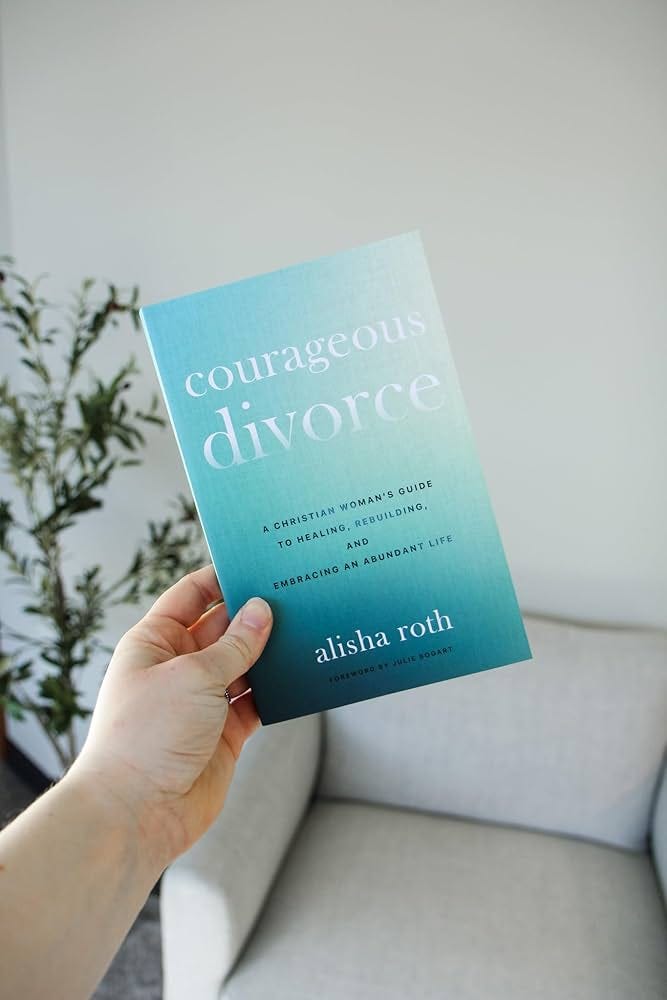
Thank you to Alisha Roth for today’s guest post. Check out her new book, Courageous Divorce, if you’re interested in reading more!
You can buy it on Amazon or at Baker Books for the lowest price and free shipping!
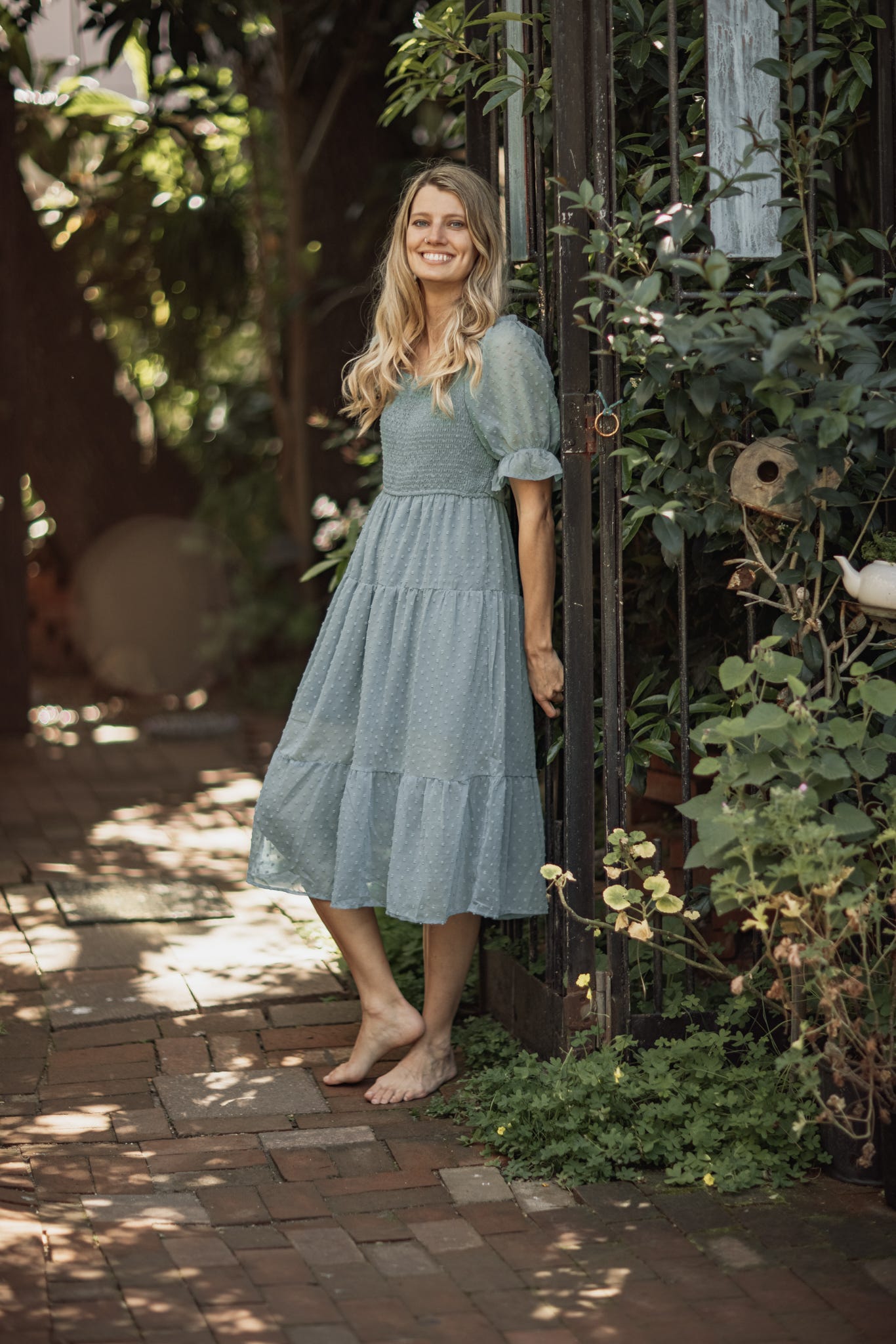
Alisha Roth is a writer and editor. She loves to write about homeschooling, raising children, spirituality, and sharing an honest look into her life of divorce, co-parenting, love, and evolving faith. As a woman and a mother to four daughters, she's passionate about encouraging women to empowerment and wholeness. Follow her on her Substack, Alisha Roth, and her website.